Ignacio Urquieta
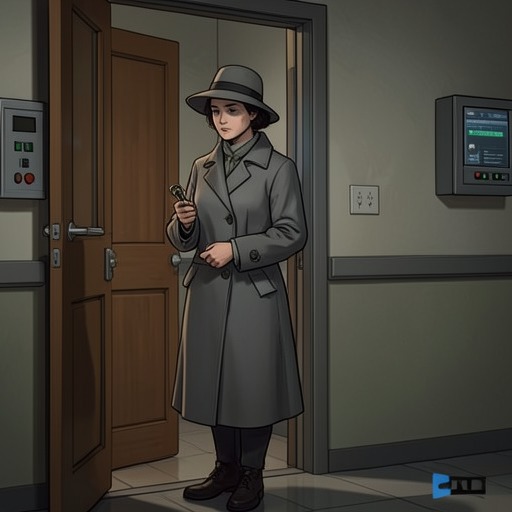
Los renglones torcidos de DiosIgnacio Urquieta is one of the most candid and unexpectedly resourceful residents of Fuentecilla. He describes himself as a lunatic who knows and admits that he is ill, a self-awareness he contrasts with the denial he sees in other patients. To Alice Gould, newly arrived in the hospital, he becomes a friendly guide and ally. Yet his composure rests on a buried disturbance: water provokes a terror rooted in an episode from childhood, and it is only when other patients throw him into a pool that the past returns and his fear begins to give way.
Identity and Introduction
When Alice first encounters him, Ignacio is already a veteran resident. He introduces himself by name and, after joking that he is the most peculiar of the hospital’s patients because he recognizes his own madness, recognizes that Alice does not appear to be ill. Their exchange establishes his directness: he is neither a doctor nor a nurse, but he is willing to speak plainly about the institution and the people in it.
His first act toward Alice is protective. A foolish patient has provoked a silent man whom Alice recognizes as the Wax Man; Ignacio intervenes, tells Alice that she may slap the aggressor if he repeats the behavior, and then asks to sit beside her. The scene presents him as someone who understands the residents’ habits and vulnerabilities, and who can respond to an insult without treating every patient as equally dangerous. He later approaches a weeping Luis Ortiz with a friendly hand on his shoulders and asks after his troubles. Such gestures make his social warmth concrete rather than merely asserted.
The hospital’s open regime gives residents room to move through the building and grounds, take part in activities, and work in its workshops. Ignacio is among the familiar patients Alice encounters at the umbrella factory, alongside Rómulo, Luis Ortiz, Carolo Bocanegra, and Antonio el Sudamericano. His life there is not confined to his illness or to the eventual crisis at the pool: he is part of the hospital’s ordinary social and working world.
Friendship with Alice Gould
Ignacio becomes Alice’s most immediately reassuring acquaintance among the people she meets at meals. In a later recollection, Alice says that he was the only sympathetic person at her table; the other patients she recalls include a crying man and one who did not speak. That remembered companionship matters especially because Alice is disoriented by her condition and has little certainty about what is happening around her. Ignacio offers a familiar presence without claiming authority over her.
Their friendship also survives Alice’s upheavals in the hospital. After one of her crises, Ignacio approaches her with a young woman whom Alice had once believed dead, and asks what has happened to Alice. He is curious and engaged, not distant from the disturbance surrounding her. Later, when the patients turn against him, Alice recognizes the danger and runs to help. She summons the white-coated staff and heads toward the pool; her effort places her among the witnesses to the event that changes Ignacio’s relation to his past.
Their connection comes to a quieter culmination after both receive declarations of health on the same day. They celebrate together over lunch at Pepe el Tuerto’s Roast Grill. A large jug of water stands as a silent witness while Ignacio recounts what the pool has brought back to him. The object that once embodied terror is present at the table, but no longer keeps him from speaking or being near it.
Water, Suspicion, and the Hospital
Ignacio’s fear of water has consequences beyond his private distress. During the investigation of a killing, Alice argues that he could not have obtained the necessary knife from the kitchens, where water ran from sinks and taps. More decisively, the killer had wiped his hands with a wet cloth at the old friars’ washhouses, where a small spring flowed continuously. Alice presents these circumstances to the doctors as incompatible with Ignacio’s severe fear of water, and her reasoning persuades them that he should be excluded from suspicion.
The argument turns a vulnerability that might otherwise make him seem helpless into evidence of his particularity. The water phobia is not a general label applied from outside: it shapes what he can do, where he can go, and which actions Alice considers impossible for him. At the same time, the later pool scene makes clear that exclusion from suspicion does not mean his fear has been understood. Its explanation lies not in the hospital’s routines but in a memory he has not been able to face.
Ignacio also takes part in a public confrontation with a man whom a group of twenty or thirty residents boo. The group is led by Ignacio, who had jostled the same man the previous day. The episode shows another side of his position among the residents: he can move from kindly attention to forceful collective action. The account identifies the action and his leadership, but does not establish his reasons, so it remains a sign of his capacity to act within the hospital’s tensions rather than a full explanation of his politics.
The Childhood Memory and Its Return
The history behind Ignacio’s fear emerges from his childhood as Iñaqui. He and Chemari Goñi had skipped school together. One day Iñaqui gave his mother a false explanation for being wet, claiming that he had slipped into the water near the harbor while watching children fish. He then avoided the tram the next morning so he would not encounter Chemari. When the school term ended for Christmas, he learned that Chemari had died by drowning in the pool at Club Loreto in Bilbao. The boy’s body was found at the bottom with his roller skates still on.
Iñaqui was shocked by the news, though he did not feel much grief because he did not love Chemari. A terrible doubt came to him, but he pushed it away. He settled instead on the likelihood that Chemari had returned to the club to skate on the days he had missed school. The childhood account leaves a crucial uncertainty intact: Ignacio later becomes convinced that he was responsible for Chemari’s death, but the narrative does not simply resolve that conviction into an independently confirmed account of what happened. What is clear is that the death and the boy’s skates remained bound to a memory he had not consciously revisited for thirty years.
The memory breaks through when a group of patients seizes Ignacio and carries him toward the hospital pool, intending to throw him in. Alice calls for help and runs after them, but reaches the pool in time to see him hurled into the water. He cries out in panic and struggles in the arms of his captors. Two nurses prepare to jump in after him; Alice is about to follow. Then Ignacio removes his shoes, which sink, and begins to swim slowly and calmly.
In the water, the present briefly becomes the childhood scene. Ignacio feels the sensation of falling and experiences the hospital pool as the pool at Club Loreto; he imagines himself five years old rather than thirty-six, and identifies the person who pushed him not as Carolo Bocanegra but as a school companion called Chemari. As he swims, the thought of taking revenge on the so-called False Mute by drowning him with roller skates gives way to recognition: the skates belong to the remembered boy, and repeating the revenge would repeat the loss. The association leads him back to Chemari’s drowning and to the possibility he has long refused to consider—that he himself killed his companion.
Recovery and Narrative Significance
Ignacio tells the doctors what happened and later gives Alice the same account at Pepe el Tuerto’s Roast Grill. His recovery is marked not by a formal explanation that settles every uncertainty, but by a changed relation to water and by his ability to narrate the memory. The pool first exposes him to the very terror that has governed him; in that exposure, his body swims before he has fully gathered the past into words. The calm rhythm of swimming contrasts sharply with his earlier panic, making the change visible before it is explained.
His story also complicates the boundary between what a patient knows and what he can bear to remember. For decades, Ignacio had not thought about Chemari’s death. The pool does not merely remind him of a fact: it collapses the distance between the frightened child and the adult resident, bringing back the remembered push, the roller skates, and the revengeful thought together. His certainty that he caused Chemari’s death is presented as part of this recovered experience, while the exact circumstances remain shadowed by doubt.
Ignacio’s arc therefore joins several roles that the hospital might otherwise separate. He is a resident who openly acknowledges his illness, a generous companion to Alice, a participant in the institution’s collective conflicts, and a man whose physical fear carries an unresolved memory. The same fear that helps Alice clear him of suspicion later becomes the route to an unexpected recovery. His return to swimming does not erase the death or make his guilt certain; it allows him to approach the past that his fear had kept at a distance.